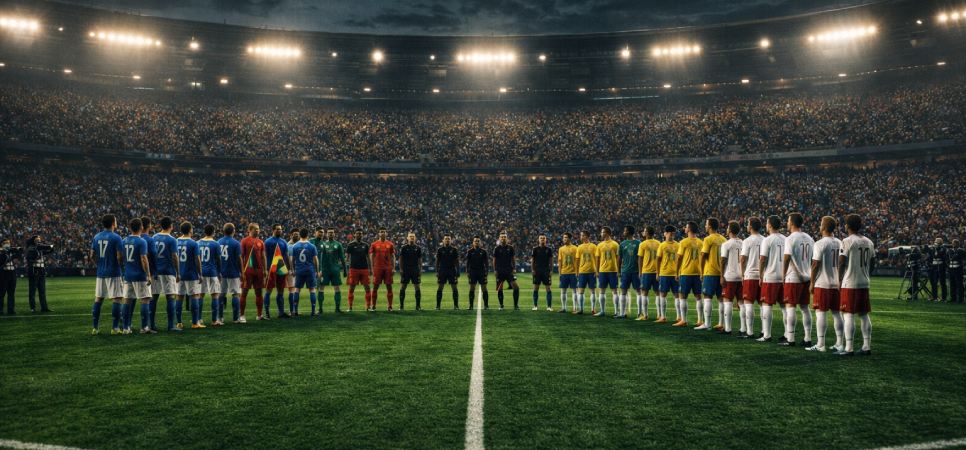
The Global Stage: World Tournaments and Their Influence
For soccer, global competitions signify the most visible events and correspondingly most commercially valuable events. The functioning of these events in concert with the detailed regulations, such as player eligibility, doping methods, refereeing, and disciplinary measures rests on the need to secure competitive sanctity. Indicators of huge organization can truly be felt in the event of host nation allocation, infrastructural planning, and federation-wide coordination.
These tournaments exert tactics on players' development, changes worldwide. Success in these cups becomes the driving force that leads to changes in youth training schemes and coaching philosophies, as well as deciding governments' funding allocations for the coming decades.
The FIFA World Cup
The most recognized global competition is the FIFA World Cup, organized by FIFA. Held every four years, it brings together qualified national teams from every confederation. Qualification cycles can span several years and involve dozens of matches across regions, ensuring that participation is earned through sustained performance rather than reputation alone.
The tournament structure typically begins with a group stage followed by knockout rounds, creating both consistency and unpredictability. Strict eligibility rules govern player selection, including nationality requirements and registration deadlines. Refereeing standards, disciplinary panels, and video review systems operate under unified regulations to promote fairness. Winning the World Cup often reshapes a nation’s sporting identity and elevates players into lasting global recognition.
The Women’s World Cup
The FIFA Women’s World Cup has grown rapidly in competitive depth and global attention. Like its men’s counterpart, it features qualification across continents and culminates in a structured group and knockout format. Investment in women’s development programs has significantly raised performance standards, making outcomes less predictable and competition more balanced.
Regulatory oversight remains central, including compliance with player welfare standards, anti-doping regulations, and tournament discipline codes. The event has become a catalyst for broader conversations about equity, funding, and professional opportunities in the sport. Its expansion reflects both sporting progress and institutional efforts to strengthen governance across all levels of competition.
The Olympic Football Tournament
The Olympic football tournament, governed in coordination between FIFA and the International Olympic Committee, carries a distinct identity. The men’s competition typically features age restrictions with limited over-age selections, while the women’s tournament operates without age limits. This structure creates a developmental pathway for emerging players while still maintaining elite competition.
Because it is embedded within the broader Olympic framework, the tournament adheres to strict athlete eligibility verification and anti-doping standards consistent with Olympic policy. While it does not always hold the same prestige as the World Cup, it offers international exposure and contributes to national team continuity between major cycles.
Continental Championships and Regional Identity
Continental competitions are selected to reflect diverse styles and competition traditions between regions, where these confederacies also serve largely as qualifiers for the worldwide event they are designed to lead into. Again, some are very strong stand-alone tournaments from a historical perspective. The arrangements are made by each confederation, till now, following some individual rules corresponding to international standards.
Plenty of potential action focused directly on these disparities, which are locally affected by tactical situations. Climate zones, infrastructure, and other developmental factors all helped in improving their standing. They offer the establishing countries a possibility to show their advancement in contrast to the greats within the region.
UEFA European Championship
The UEFA European Championship, organized by UEFA, is widely regarded as one of the most competitive continental tournaments. European qualification campaigns are demanding, reflecting the depth of talent across the region. The final tournament blends group and knockout stages, often producing tightly contested matches.
Governance includes strict financial and licensing requirements for participating federations, as well as coordinated officiating standards. Because many European players compete in top domestic leagues, tactical familiarity between opponents is common, increasing the importance of strategic adjustments and squad depth.
Copa América
Copa América, overseen by CONMEBOL, is the oldest continental competition in international soccer. South American teams are known for technical skill and creative play, contributing to the tournament’s distinctive identity. Despite involving fewer member nations compared to other confederations, the level of competition remains high.
Invited guest teams have occasionally participated to expand competitive diversity. Regulatory compliance aligns with global standards, including disciplinary codes and eligibility verification. Victories in Copa América carry significant cultural weight within participating countries.
Africa Cup of Nations
The Africa Cup of Nations, organized by CAF, highlights the growing strength and depth of African soccer. Qualification rounds are extensive, reflecting the continent’s size and competitive ambition. The tournament showcases athleticism, tactical evolution, and emerging talent.
Operational challenges, including climate and infrastructure variation, require careful planning and coordination. Player release regulations must align with international club calendars, ensuring compliance while protecting athlete welfare. The competition has played a central role in increasing global recognition of African football.
Asian Cup
The AFC Asian Cup, managed by AFC, represents a rapidly developing competitive landscape. Investment in domestic leagues and youth academies has elevated standards across the region. The tournament structure mirrors other continental championships, combining group stages with knockout rounds.
Administrative oversight includes licensing procedures, player eligibility checks, and disciplinary review panels. Success in the Asian Cup often correlates with broader national development strategies aimed at strengthening grassroots participation and professional pathways.
CONCACAF Gold Cup
The CONCACAF Gold Cup, organized by CONCACAF, features teams from North America, Central America, and the Caribbean. Qualification pathways and tournament expansion have increased competitive parity within the region. The event frequently acts as a proving ground for younger squads preparing for global competitions.
Compliance standards focus on eligibility, anti-doping measures, and match officiating protocols. Hosting responsibilities rotate across member nations, encouraging infrastructure development and regional engagement.
Youth and Developmental Tournaments
Youth competitions provide structured pathways for emerging talent and serve as early indicators of future senior success. They operate under age-verification protocols and strict eligibility documentation requirements to protect competitive integrity.
These tournaments are not simply preparatory events; they often reveal tactical innovations and generate professional opportunities for young athletes across continents.
Under-20 and Under-17 World Cups
Youth World Cups organized by FIFA focus on players within defined age brackets. Documentation verification and compliance monitoring are central to preventing eligibility disputes. Matches follow standardized competition rules consistent with senior events.
Performance at these tournaments can accelerate professional careers. Scouts and national program directors monitor outcomes closely, integrating lessons into broader development strategies. While physical maturity varies widely at youth levels, technical and tactical foundations often signal long-term potential.
Regional Youth Championships
Continental confederations host their own youth championships, aligning with global qualification cycles. These competitions ensure that emerging players gain exposure to international standards before transitioning to senior teams.
Regulatory frameworks mirror senior tournaments but emphasize safeguarding policies tailored to minors. Medical protocols, education provisions, and welfare protections are integral components, reinforcing the balance between competitive ambition and responsible governance.
Qualification Systems and Competitive Balance
Qualification processes form the backbone of international tournaments. They are designed to distribute opportunities across regions while maintaining competitive standards. Allocation of tournament slots typically reflects historical performance, confederation size, and development indicators.
These systems also function as revenue and development drivers, as hosting qualification matches stimulates local engagement and infrastructure investment.
- Multi-year qualification cycles ensure consistency rather than one-off performance.
- Ranking systems influence seeding and group placement to balance competition.
- Disciplinary and appeals committees review disputes related to eligibility or officiating.
- Revenue distribution models support smaller federations through solidarity payments.
While qualification can be demanding, it reinforces legitimacy. Teams must navigate home and away fixtures, travel demands, and varying conditions. The process often shapes squad identity long before the final tournament begins.
Economic, Cultural, and Regulatory Impact
Major tournaments generate substantial economic activity through tourism, broadcasting rights, and sponsorship agreements. Host nations must comply with infrastructure standards covering stadium safety, transportation planning, and accommodation capacity. Financial oversight mechanisms aim to ensure transparency in bidding and expenditure.
Culturally, these competitions influence national narratives. Success can unify diverse populations under a shared identity, while defeat may trigger reassessment of training structures and governance models. Media coverage amplifies narratives that extend beyond sport, touching on diplomacy, migration, and representation.
Regulatory compliance remains central throughout. Anti-corruption policies, ethical codes, and independent review bodies monitor operations to protect integrity. As global visibility increases, so does scrutiny, reinforcing the need for transparent administration.
Technology, Officiating, and Fair Play
Advancements in officiating technology have reshaped international tournaments. Video review systems assist referees in critical decisions, aiming to reduce clear errors while maintaining match flow. Goal-line technology provides definitive confirmation in scoring situations.
Fair play initiatives extend beyond the field. Anti-discrimination campaigns, disciplinary codes, and player conduct standards form part of comprehensive governance frameworks. Education programs for referees and officials promote consistency across confederations.
While technology enhances accuracy, debates continue regarding interpretation and match rhythm. Governing bodies periodically review regulations to balance precision with the human element that defines the sport.
Where the World Competes
Large international competitions mean more than mere games; they are, moreover, the result of qualifying events throughout the year, rule development and growth of the sport over the years. The campaigns of national and world tournaments will shape the tactics enforced, the rules and the histories of sports over the generations.
From the early youth events to the World Cup final itself, all are an expression of collective commitment to clean play, compliance, fair play and competitive excellence. On stepping out on the field, the national teams do not carry their own dreams only, they carry the hopes of institutions and fans in every part of the world.
History made 🏆
— FIFA (@FIFAcom) February 2, 2026
The first-ever FIFA Women’s Champions Cup has concluded, crowning @ArsenalWFC as its inaugural winners.
Relive some of the best #FIFAWCC moments 📸 pic.twitter.com/VpRZp8IzLB
With the kind support: