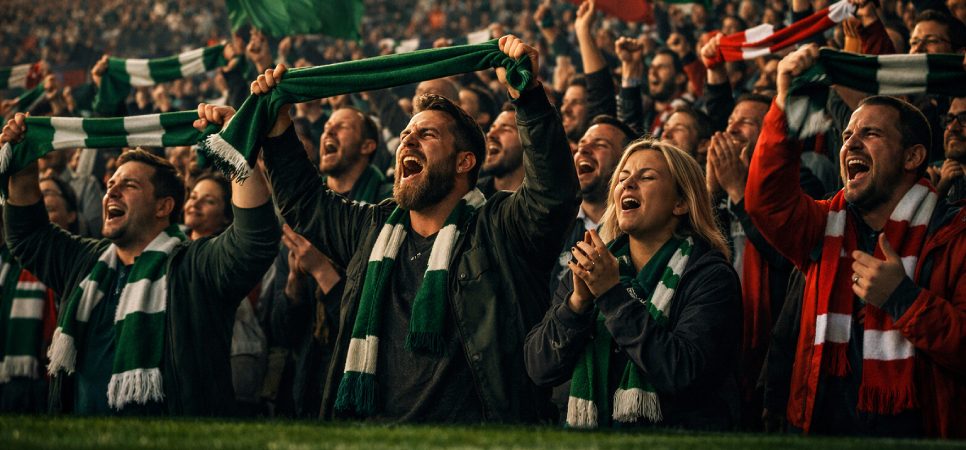
Supporters as the Heart of the Game
Fans are hardly passive brooding recruits; they are the game's critical authors (the aesthetic-moral weight) and foremost social way for having an independent existence. From tiny town pitches up to the grandest of arenas, the atmosphere created by the crowd can make the games generate that magical feel, and what will be remembered years hence. This culture is not just a matter of being spontaneous, but it is a thing that is learned, improved, and passed from one generation to another, be it within one's home or a close-knit community.
Supporter culture varies by region, but a few characteristics appear globally. Fan devotion is preferred over success; thus, attendance becomes a commitment rather than mere enjoyment. Every act of attendance is a statement of belonging for everybody else who has decided in favor of a team. For many followers, their fan allegiance is an unbroken, lifelong relationship marked by experiences equally shared, rather than victories.
Chants, Songs, and Collective Voice
Chants are one of the most recognizable expressions of soccer culture. They transform thousands of individual voices into a single sound that carries emotion, pressure, and encouragement. Some chants celebrate history or heroes, while others mock opponents or respond to moments unfolding on the field. What matters most is not originality, but repetition. A chant gains power by being known, expected, and shared.
These songs often evolve over time, absorbing new verses or meanings as seasons pass. They are rarely written down, yet most supporters know them by heart. Singing together creates a sense of unity that dissolves social differences, allowing strangers to act as a single group. In this way, sound becomes one of the strongest cultural tools in the game.
Colors, Scarves, and Visual Identity
Team colors serve as visual shorthand for allegiance. Wearing them is not simply decorative. It signals loyalty, history, and a willingness to be identified with a group. Scarves, jerseys, and banners are treated with respect, often saved for special occasions or worn in specific ways that carry meaning within supporter culture.
These symbols also help define territory. On matchdays, streets, pubs, and public spaces are transformed by color, creating a visible presence that extends the stadium atmosphere outward. Even when results are poor, maintaining these visual traditions reinforces continuity and pride. The colors remain constant, even when players and managers change.
Matchday Rituals and Routine
For many supporters, matchday follows a familiar script. The same route to the stadium, the same meeting place, the same pre-match meal or drink. These routines provide structure and anticipation, turning the game into a weekly anchor rather than an isolated event. Missing these rituals often feels as significant as missing the match itself.
Rituals also help manage emotion. They create a sense of control in a game defined by uncertainty. Whether it is wearing a specific item of clothing or arriving at a certain time, these habits allow fans to feel involved in outcomes they cannot directly influence. Over time, rituals become part of personal identity, tied to memory and belonging.
Community, Identity, and Belonging
Soccer culture is deeply social. Clubs often reflect the neighborhoods, cities, or regions they represent, shaping how people see themselves and others. Supporting a team becomes a way to express where you come from, what you value, and who you stand with. This connection between place and club gives soccer its unique emotional depth.
The sense of belonging created through the game often extends beyond geography. Supporters who have never met share an immediate bond through common symbols, stories, and experiences. This shared identity can feel as real as family or profession, offering stability in times of change.
Local Roots and Shared History
Many clubs began as community institutions, formed by workers, schools, or local associations. Even as the modern game has grown more commercial, these origins remain central to supporter identity. Stories about early matches, legendary seasons, or historic grounds are repeated and preserved as part of collective memory.
This history is not just nostalgic. It provides context for present struggles and successes. Supporters often measure current moments against past standards, using history as a reference point. In doing so, they maintain a sense of continuity that links generations and reinforces long-term commitment.
Family Traditions and Inherited Loyalty
For countless fans, support begins at home. Parents introduce children to clubs, matches, and rituals, creating an inherited loyalty that feels natural rather than chosen. Attending a first match or watching games together becomes a formative experience that shapes how the sport is understood.
This inheritance strengthens the emotional bond between supporters and clubs. Loyalty becomes personal, tied to family memory and shared time. Changing allegiance later in life is often viewed as unthinkable, not because of rules, but because of the emotional weight attached to those early experiences.
Belonging Beyond Social Boundaries
One of soccer’s most powerful cultural traits is its ability to bring together people who might otherwise never interact. In stadiums and public viewing spaces, differences in age, profession, or background fade into secondary importance. What matters is shared attention and shared emotion.
This temporary equality does not erase social realities, but it creates moments of connection that feel genuine. Celebrating or suffering together builds trust and recognition, even among strangers. These moments help explain why soccer culture remains resilient, even as societies change around it.
Rivalry, Emotion, and Expression
Rivalries are central to soccer culture, giving matches added meaning beyond standings or trophies. They are built through geography, history, and repeated encounters, often stretching back decades. While rivalry can intensify emotion, it also reinforces identity by defining who supporters are not.
Emotion in soccer is rarely hidden. Joy, frustration, anger, and hope are expressed openly and collectively. This emotional freedom is part of the game’s appeal, offering a space where strong feelings are accepted and shared rather than restrained.
Rivalry as Narrative and Tradition
Rivalries provide structure to seasons and calendars. Certain matches are anticipated months in advance, framed as events rather than fixtures. Stories from past encounters are retold, keeping memories alive and heightening tension before kickoff.
These narratives give supporters a sense of continuity and purpose. Winning or losing a rivalry match can define a season, regardless of broader performance. Through rivalry, soccer culture gains drama and emotional stakes that go beyond the scoreboard.
Celebration, Grief, and Collective Feeling
Few sporting moments match the intensity of a shared celebration after a crucial goal. Equally, collective disappointment can feel heavy and lingering. Experiencing these emotions together reduces isolation and amplifies meaning.
Supporter culture encourages openness in these moments. Singing, shouting, and physical gestures are not only accepted but expected. This shared emotional expression helps explain why fans often describe soccer as something they feel rather than something they watch.
Boundaries, Respect, and Responsibility
While passion is central to soccer culture, most supporter groups recognize informal boundaries. Respect for traditions, for fellow supporters, and for the game itself shapes behavior over time. When these boundaries are crossed, debates emerge within communities about responsibility and representation.
These internal discussions are part of cultural evolution. Supporters continuously redefine what it means to represent their club and community, balancing intensity with accountability. In this way, soccer culture remains active rather than static.
Media, Memory, and Modern Influence
The way soccer is experienced has changed significantly through media. Matches are now followed through screens, highlights, and commentary as much as from the stands. This shift has expanded access while also reshaping how culture is shared and preserved.
Despite these changes, core cultural elements remain. Songs, rituals, and identity adapt to new platforms without losing their meaning. Soccer culture proves flexible, capable of evolving while holding onto its foundations.
Broadcasting and Shared Moments
Television and digital coverage allow supporters to follow matches from anywhere, creating global communities around local clubs. Shared moments now happen simultaneously across cities and countries, connected through live broadcasts.
These experiences still rely on collective emotion. Even when watched alone, supporters often engage through messages, social spaces, or post-match discussion. The sense of shared time remains, reinforcing cultural bonds beyond physical proximity.
Storytelling, Highlights, and Memory
Media plays a key role in shaping memory. Iconic moments are replayed, discussed, and archived, becoming reference points for future generations. These stories help define eras and influence how clubs and players are remembered.
Supporters actively participate in this storytelling, sharing interpretations and preserving perspectives that official narratives might overlook. In doing so, they maintain ownership over their cultural history rather than leaving it solely to broadcasters or institutions.
Change, Commercial Pressure, and Adaptation
Modern soccer faces increased commercial influence, which can challenge traditional culture. Rising costs, shifting schedules, and global branding sometimes create tension between institutions and supporters.
Yet culture adapts. Fans find new ways to express identity and maintain rituals, even as external conditions change. This adaptability ensures that soccer culture remains grounded in people rather than structures alone.
More Than a Game, Still a Community
Soccer culture is about the songs, the colors, something we do when we all wear scarves, and the shared anxiety. It ties individuals to a town, and then to a lifetime, giving it a completeness that exists everywhere except on the pitch. With the banning of hooligan firms and the testosterone-fueled diatribe of British tabloids, soccer has changed drastically in ways both ultimate and immaterial. Nonetheless, soccer culture is maintained by people due to their familiarity and devotion to its mandatory idiocies. It can be revived each time people come together to watch, singing, and caring.
History made 🏆
— FIFA (@FIFAcom) February 2, 2026
The first-ever FIFA Women’s Champions Cup has concluded, crowning @ArsenalWFC as its inaugural winners.
Relive some of the best #FIFAWCC moments 📸 pic.twitter.com/VpRZp8IzLB
With the kind support: